Your exit plan for accelerated compute is complete. The thing it should name sits one layer below the register.
The obligation has applied since 17 January 2025 and it presumes a substitute. The substitutable part is the cloud contract; the part that cannot be substituted is a set of libraries nobody has to declare.
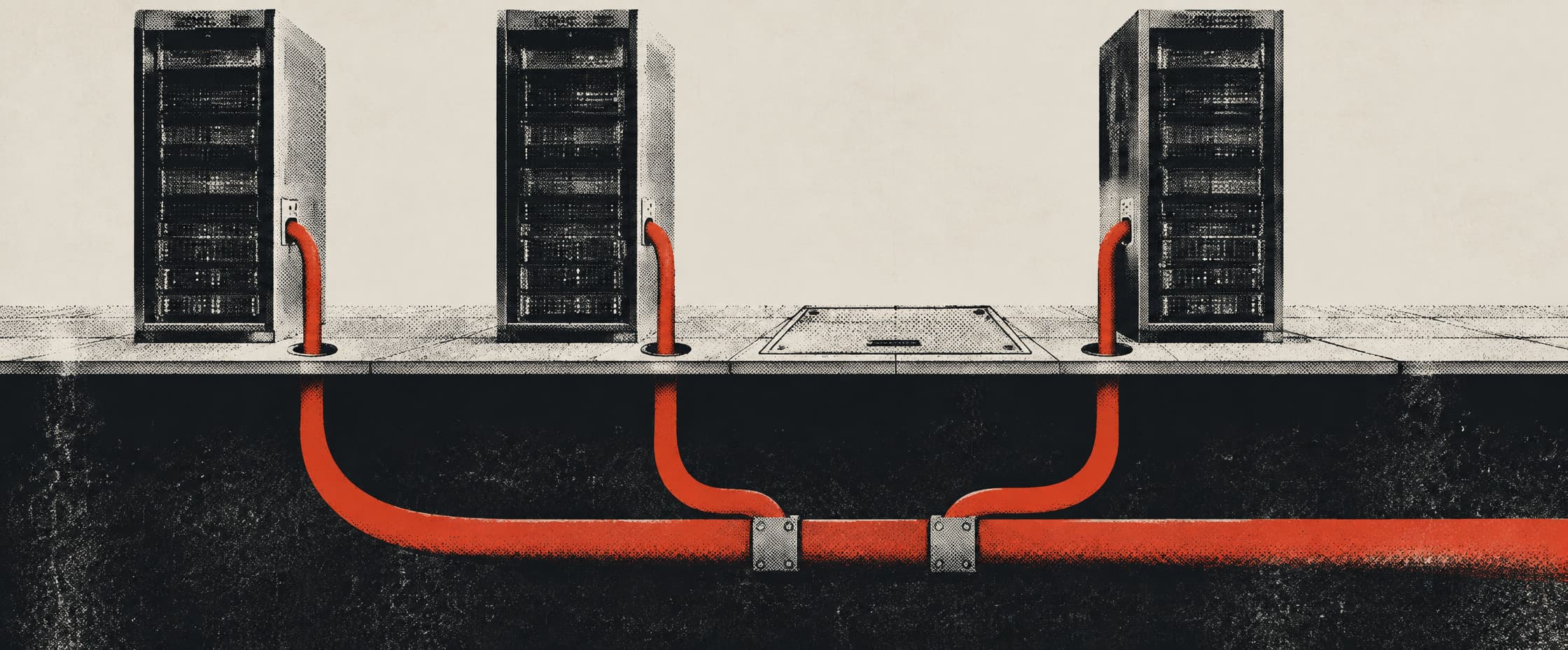
The exit strategy has a version number, a named owner and a review date, which is three more than most documents in the file. Section four is the one that matters. On the failure or withdrawal of the provider, affected workloads are migrated to an alternative provider within the transition period, and the transition period is a figure in months.
For object storage that sentence is true, and somebody has tested it. For the training cluster it is a sentence with no object in it. The meeting moved on, because the sentence parses.
The obligation is about substitution, and it has been in force for a year
DORA applied from 17 January 2025. Among the things it requires of a financial entity using an ICT service that supports a critical or important function is an exit strategy: documented, kept current, tested, with transition arrangements and a way to get your data back in a form you can use.
The drafting is not naive. Whoever wrote it had sat through an outsourcing review and knew that the plan people produce under pressure is a slide. It asks for the plan in advance, in writing, and it asks you to rehearse it.
What a regulation cannot do is create somewhere to go. Substitution is treated throughout as a commercial problem — negotiate, procure, migrate, unwind — because for almost everything in the register it is one. There is a second supplier of the thing, and a third, and the work of moving between them is tedious, expensive and finite. The obligation is well drafted for a market that has one.
The register records the counterparty, not the dependency
Sitting next to the plan is the register of information: every contractual arrangement for ICT services, the entity on the other side identified by its legal identifier, the function it supports, whether that function is critical or important, and subcontracting recorded down to the level that actually carries the service.
Read what that is. It is a register of counterparties. Your counterparty for accelerated compute is a cloud provider or a specialist hosting firm, and the contract you file is the contract with them. If you bought the machines outright, the company that sold them to you is a supplier of hardware, and on most readings not a provider of an ICT service at all. Either way, the name the entire market spent last year worrying about is not on your form, and there is no field where you could put it if you wanted to.This is not a criticism of the template. A register of contracts can only hold parties you have a contract with, and that constraint is what makes it useful for everything else it does.
The oversight framework runs on the same logic. The European supervisory authorities designate critical ICT third-party providers, and the criteria for designation include how far the provider could be substituted. The word is in the machinery. It is applied to an entity with a contract, in a chain that is followed downward only as far as the services being provided, and the draft technical standard on subcontracting was narrowed before adoption in precisely the direction you would expect: what got trimmed was how far down the chain the obligations reach.
The silicon is the substitutable part
Ask an engineer what it would take to move a training workload onto another vendor's accelerators and you will get a good answer, in order, and almost none of it is about the chips. The chips are fine. Competing parts are made, they are bought, and for a broad class of work they are quick enough.
What has to move is everything written against the chips. The maths libraries. The collective communication layer that decides how a job spreads across several thousand devices and what it does when one of them stops answering. The custom kernels somebody wrote for the attention implementation, which are the reason the run finishes on Thursday rather than Sunday. The framework build, tuned for a year against one stack. The profiler your people can read at two in the morning. The scheduler plugin, the base image, the monitoring, and the four engineers who know why the third one is configured the way it is.
None of that is the chip. It is the lock-in, and nobody bought it. It accumulated, one convenient library at a time, in public, while everybody watched.
The split inside the workload matters more than the vendor comparison. Inference on a standard architecture, expressed in a high-level framework and compiled rather than hand-written, moves with something close to dignity — weeks, a requalification, an argument about latency. Training with hand-tuned kernels and a tuned interconnect is not a migration. It is a rebuild, followed by a period in which you do not know whether your numbers mean what they used to mean. Both of those live under the same heading in the exit plan.
A plan that has never been executed is a hypothesis with a version number.
There is also a licensing question that nobody raises in the risk meeting because it sounds like somebody else's problem. The licence for the dominant toolkit carries a term about running what it produces on other vendors' hardware through a translation layer. Translation layers are the fastest of the escape routes, and the fastest escape route has a contract attached to it.
Supervisors have named concentration; substitutability is the other word
Concentration is well covered ground. Banking supervisors have been writing about cloud and outsourcing concentration for years, the systemic risk side has published on the same dependency from the financial stability angle, and the national authorities ask about it in every inspection that touches an ICT programme. The vocabulary is settled and the boards have learned it.
Concentration and substitutability are not the same risk, and the difference is the whole piece. Concentration is how many of your eggs sit in one basket, and it is managed by diversification. Substitutability is whether a second basket exists at a price you could pay inside your own recovery time. The first has a remediation plan. The second has a paragraph.
I could not find a supervisory statement that treats the accelerator software ecosystem as a substitutability question in its own right, and I looked. That is a negative claim and it is only as good as my search; there may well be a speech, a thematic review or a footnote in a risk report that does it. What I can say is that the documents my readers are producing contain the first word and not the second, and that no template has asked them for the second.
What a board does with a document that cannot honestly be written
There are three versions of section four and only two of them are honest.
The first is to write the plan for the layer that genuinely is substitutable. The migration from one hosting provider to another is real work with a real price, the transition period means something, and the plan should be tested on that basis and say so in its own scope. Narrower, defensible, and it does not pretend.
The second is to name the constraint in the plan itself. A section that says no equivalent substitute exists for this workload inside our recovery window, here is what we are doing about it, here is the loss we would accept, and here is who carries it, is not a failure to comply. It is the only version of the document a supervisor can do anything with, and it is the version that turns an engineering fact into a board decision with a date and a name on it.
The third is to leave the sentence general enough to be true of nothing, approve it, and file it. That is the one that gets chosen, and I would not be sarcastic about the people who choose it. They are not being lazy. They are being asked to attest to a capability that does not exist in their market, by a deadline, in a document whose failure mode is a finding and whose success mode is silence. The incentive points exactly one way.
Whoever is short in that arrangement is not the drafter. Your own service levels do not pause because a dependency you never contracted with became difficult, and a supervisor asking why a portfolio was not repriced on time does not accept a supply chain as an answer. The loss settles where it always settles, on the smallest balance sheet in the chain, held by whoever was on shift.
The registers go in again this year. They will be complete, they will reconcile, and they will describe a market in which every entity has diversified carefully across several providers of one underlying dependency. That is not a fault in the template. The template asked who you contracted with, and everyone answered accurately.
The question nobody has been required to answer in writing is what section four does when the substitute is not available at any price. When there is a box for it, the answers will be interesting. They will also be filed.
Written from
Primary The document itself. Claims in this piece rest only on these.
- Regulation (EU) 2022/2554 (DORA), the ICT third-party risk chapter and the exit strategy provisionsThe instrument the whole piece rests on. Not opened for this draft, which is why no article number appears anywhere in the body and nothing is quoted. Two things must be checked before this runs. First, the application date printed as 17 January 2025. I am confident of it. Second, the characterisation of what an exit strategy must contain — documented, kept current, tested, with transition arrangements and the retrieval of data in a usable form. If that list is wrong the second section does not stand. Per house rule, if an editor restores the substance they should restore the location with it rather than leaving the paraphrase bare.
- The DORA register of information and the implementing standard setting its templatesNOT OPENED FOR THIS DRAFT. The description of what the register holds — the counterparty identified by legal identifier, the function supported, the criticality flag, and subcontracting recorded to the depth that actually carries the service — is written from the shape of the reporting exercise as firms have described it to me, not from the template. The subcontracting depth is the load-bearing item and it is the one I am least sure of. Verify it, or cut the clause and keep the sentence about counterparties, which survives either way.
- The oversight framework for critical ICT third-party providers, and the delegated act setting the criticality criteriaCited for one proposition only: that the criteria for designating a critical ICT third-party provider include the degree to which that provider could be substituted. I am confident the concept is in the criteria and have not read the delegated act for this draft, so no criterion is numbered, weighted or quoted. Separately and deliberately: I have not checked the published list of designated providers this month, and the body therefore asserts no designation, no count and no name. Do not let anyone add one.
- The technical standard on subcontracting of ICT services supporting critical or important functionsThe most checkable claim in the piece and the one I would cut first. The body says the draft was sent back and narrowed before adoption, and that what was narrowed concerned how far down the chain the obligations reached. I am confident of the direction and not of the ground, the date or the wording, none of which is printed. If an editor cannot stand it up in an afternoon, delete the sentence: the paragraph works without it.
- Nvidia CUDA toolkit end user licence agreement, current versionNOT OPENED FOR THIS DRAFT. The body says the licence carries a term about running output produced by the toolkit on other vendors' hardware through a translation layer, and prints no wording, no version and no date because I have not read it. This is a factual claim about a document that anyone can download in two minutes, which is exactly why it must be read before publication. If the term is not there, or is narrower than described, cut the sentence.
- Supervisory material on cloud and outsourcing concentration risk in the financial sectorCharacterised in general terms and no document is named, dated or quoted, because I have not read a specific one for this draft. Nothing in the argument rests on any individual publication. The harder item is the negative claim in the same section: that I found no supervisory statement treating the accelerator software ecosystem as a substitutability question in its own right. A negative of that kind is only as good as the search behind it, the body says so, and if an editor finds one the section changes rather than survives.
Lead Pointed us at the story. Nothing here is cited as authority.
- Vendor and hyperscaler documentation for alternative accelerator stacks and portability compilersWhere the engineering section came from, along with conversations I am not citing. No product, stack or vendor other than Nvidia is named in the body for this reason. The claim that alternative stacks run in production at serious scale is the one an editor should either attach a verifiable deployment to or soften to what firms say about themselves.