Nine of Europe's biggest games may owe their players every unused coin.
The Key Principles the nine are being measured against carry a footnote saying they bind nobody and that ignoring them cannot automatically be considered unlawful.
You cannot buy the sword. You buy 750 gems for five euros, the sword costs 500, and what happens to the other 250 is the entire business model.
That example is not mine. It sits on page four of the Consumer Protection Cooperation Network's Key Principles on in-game virtual currencies, drawn as a storefront card: Sword of Destiny, requires level 20, critical hit chance +10%, priced at 750 and at five euros in the same breath. Somebody at a consumer authority built a fake item shop to make the point, which tells you how long they have been staring at real ones.
On 30 September the CPC Network — the people who enforce consumer law in the member states, coordinated by the Commission — opened coordinated action against nine companies over that gap. Crytek, InnoGames, King.com, Mojang, Plarium Europe, PLR Worldwide Sales, Riot Games, Supercell and Ubisoft EMEA. The games named are Hunt: Showdown 1896, Forge of Empires, Candy Crush Saga, Minecraft, Mech Arena, Gardenscapes, Valorant, For Honor and Clash of Clans. Between them they are a decent proxy for how the industry earns money when it is not selling boxes.
The coverage has been about disclosure. Show the real price in euros, stop making people do two-step currency arithmetic before they can tell what a hat costs. That is Principles 1 to 3, it is the part a publisher can live with, and it is not where this gets expensive.
The principle nobody is quoting is about refunds
Principle 5 runs to a paragraph and cites Articles 9 to 16 of the Consumer Rights Directive. Under it sit two practices to avoid, and the first one is doing something quietly enormous:
Exempting the purchase of in-game virtual currency, which is not digital content, from the right of withdrawal
Read the subordinate clause again. Which is not digital content.
Here is why that clause is the piece. A consumer buying digital content normally keeps a fourteen-day right to change their mind, and loses it only by giving express consent to start using the thing immediately and acknowledging that the right is going. Every storefront on earth has built that click. It is the reason you cannot return a film you have started.
The CPC Network's position is that buying the currency is not that transaction. The gems are a method of payment, not the content. So the click that kills the withdrawal right on the sword was never the click that killed it on the gems — and the second practice to avoid says what follows:
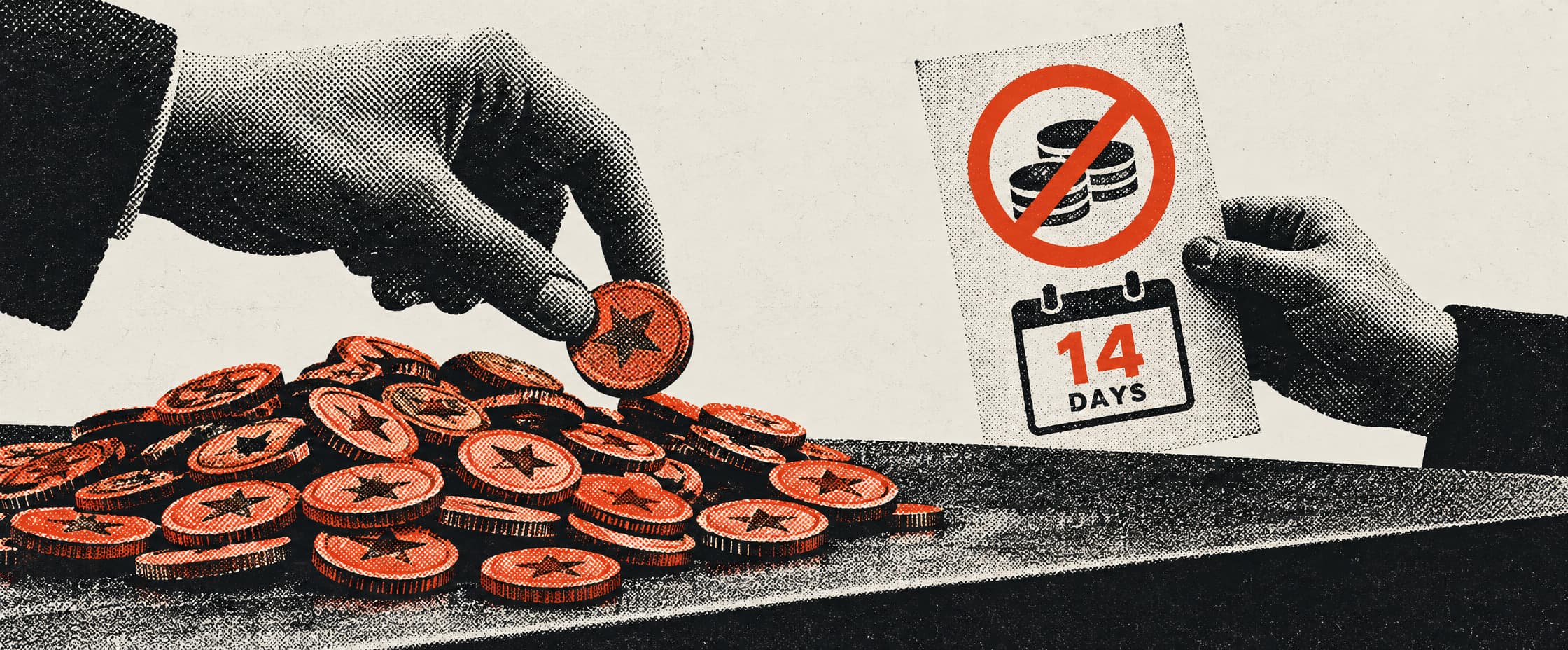
Denying consumers' right to withdraw from a contract for the purchase of in-game virtual currency within 14 days for any in-game virtual currency that remains unused
The unused balance. The 250 gems. The part the economics were built on.
UCPDDirective 2005/29/EC
Whether the design pushes someone into spending more than they meant to. Principles 1 to 3 and 7 sit here, including Point 28 of Annex I on direct exhortations to children.
CRDDirective 2011/83/EU
What the buyer was told before paying, and whether they can still change their mind. Principles 4 and 5, the second citing Articles 9 to 16.
UCTDDirective 93/13/EEC
Whether the terms can do what they say — revalue a currency, withdraw a purchased item, close an account without appeal. Principle 6.
None of this is the Key Principles themselves. By their own footnote they bind nobody, and failing to follow them 'cannot be automatically considered unlawful'. The document organising the argument has no force; the three directives underneath it do.
The guidance says, in writing, that it is not binding
Footnote 1, first page:
The present document does therefore by no means bind the national authorities or the European Commission.
And, two sentences earlier, that not respecting the recommendations "cannot be automatically considered unlawful". This is normal — it is guidance, not legislation, and a network of enforcers saying so in a footnote is better behaviour than most guidance manages.
It does make the September announcement harder to read than the headlines suggest. The Commission's own page says the nine are "suspected of using commercial practices which may breach EU consumer law in several games in relation to in-game virtual currencies", and then stops. It does not say which practices. It cites no article. It sets no deadline. What it says is that failing to address the concerns "may lead to enforcement measures by national authorities" — which is nine letters and a wait, not a case.
So the honest position is that nobody has yet asserted the refund reading against a named company, and no court has looked at it. The reading exists, it is published, twenty-seven enforcement authorities put their name to it eighteen months ago, and it has been sitting there since.
The paragraph about whales
While everyone was reading Principle 1, Principle 7 said this:
Consumers that are willing to spend excessive amounts of money on and in a video game, so called 'whales', may be considered vulnerable since they are likely to struggle with impulse control or gambling disorders. Consequently, video games that base their business model on targeting 'whales' are likely to target a vulnerable group of consumers.
And then: the fairness of those practices "is to be assessed according to a stricter threshold".
That is a regulator writing your business model is the aggravating factor in the politest font available, and it has been public since March 2025 while the industry argued about loot box odds.
I have no idea whether any of the nine games does this, and neither does anyone else reading the announcement, because the Commission did not say. What is knowable is that the test now exists in writing, that it points at the revenue concentration rather than at any particular screen, and that revenue concentration is not a secret — it is in the earnings calls.
What this actually turns on
Not a fine. Fines are survivable and they are what the industry has budgeted for.
If the reading in Principle 5 holds — that buying the currency is not buying the content, and the fourteen days therefore never lapsed on the balance — then the exposure is every unused balance across nine games for a rolling fortnight, forever, as an operating condition. That is not a penalty. That is a change to what the float is worth.
Nobody has tested it. The next move belongs to a national authority, because the Commission has conspicuously not made one, and the first company to be asked in writing what its leftover balances come to will have a more interesting quarter than the nine letters suggest.
Written from
Primary The document itself. Claims in this piece rest only on these.
- The Consumer Protection Cooperation Network's Key Principles on In-game Virtual Currencies, published 21 March 2025Read in full for this piece, all eight pages. Source for: the definition of in-game virtual currency at page 1 and the exclusion of cryptocurrencies at footnote 2; the seven principles and the legal basis stated under each, quoted here as the document states them; the worked Sword of Destiny example carrying a price of 750 and of EUR 5 at page 4; Principle 3's practices to avoid, including currencies offered 'only in bundles mismatching the value of purchasable in-game digital content and services'; Principle 5 and its two quoted practices to avoid; Principle 6's list of terms to avoid; Principle 7, its basis in Articles 5-8 and Point 28 of Annex I of the UCPD, and the paragraph on 'whales', quoted here in full rather than paraphrased because the paraphrase sounds like an accusation and the original is a finding; and footnote 1, which is the disclaimer this piece turns on.
- Coordinated actions: social media, online games and search engines — CPC Network action on in-game virtual currencies, announced 30 September 2026Read for this piece. Source for the nine companies as the Commission spells them — Crytek GmbH, InnoGames GmbH, King.com Limited, Mojang AB, Plarium Europe, PLR Worldwide Sales Limited, Riot Games Limited, Supercell Oy, Ubisoft EMEA SAS — and for the nine games. Source also for three absences this piece relies on: the page states the companies are 'suspected of using commercial practices which may breach EU consumer law in several games in relation to in-game virtual currencies' without naming which practices, cites no legal instrument for this action, and sets no deadline. It says only that failure to address the concerns 'may lead to enforcement measures by national authorities'. Earlier reporting that this action carries a fourteen-day withdrawal demand does not come from this page; the withdrawal material is in the Key Principles, which is a different document, and the distinction is the piece.
- Directive 2005/29/EC on unfair commercial practices; Directive 2011/83/EU on consumer rights; Council Directive 93/13/EEC on unfair terms in consumer contractsNot opened for this piece, and an editor should treat every article number here accordingly. Articles 9 to 16 CRD, Articles 5, 8 and 9 UCPD, Article 3(1) and (3) UCTD, and Point 28 of Annex I UCPD are reproduced as the Key Principles cite them — locations, not independent readings. The account of how the digital-content exemption from withdrawal works, including the requirement for express consent and acknowledgement before the fourteen days expire, is the Key Principles' account of the CRD and not this desk's reading of Article 16. If the operative sentence about unused balances is to run, somebody should open Articles 9 to 16 first.
- Which of the nine games sells currency only in fixed bundles, and what each one's terms say about refundsNot established, and the piece says so rather than filling it. This desk did not open the storefronts or the terms of the nine named games, did not put the question to any of the nine companies, and has no comment from any of them. No claim here describes what any individual game does. Where the body describes bundle mismatch it is describing the practice the Key Principles name, not a finding about Candy Crush Saga or any other title on the list.